What Mastery Looks Like
Mastery Is More Than a Correct Answer
True mastery happens when students can confidently apply what they've learned in new situations—not simply recall information for a test.
Mastery means students understand the skill, can explain their thinking, and can transfer their learning across different texts and tasks.
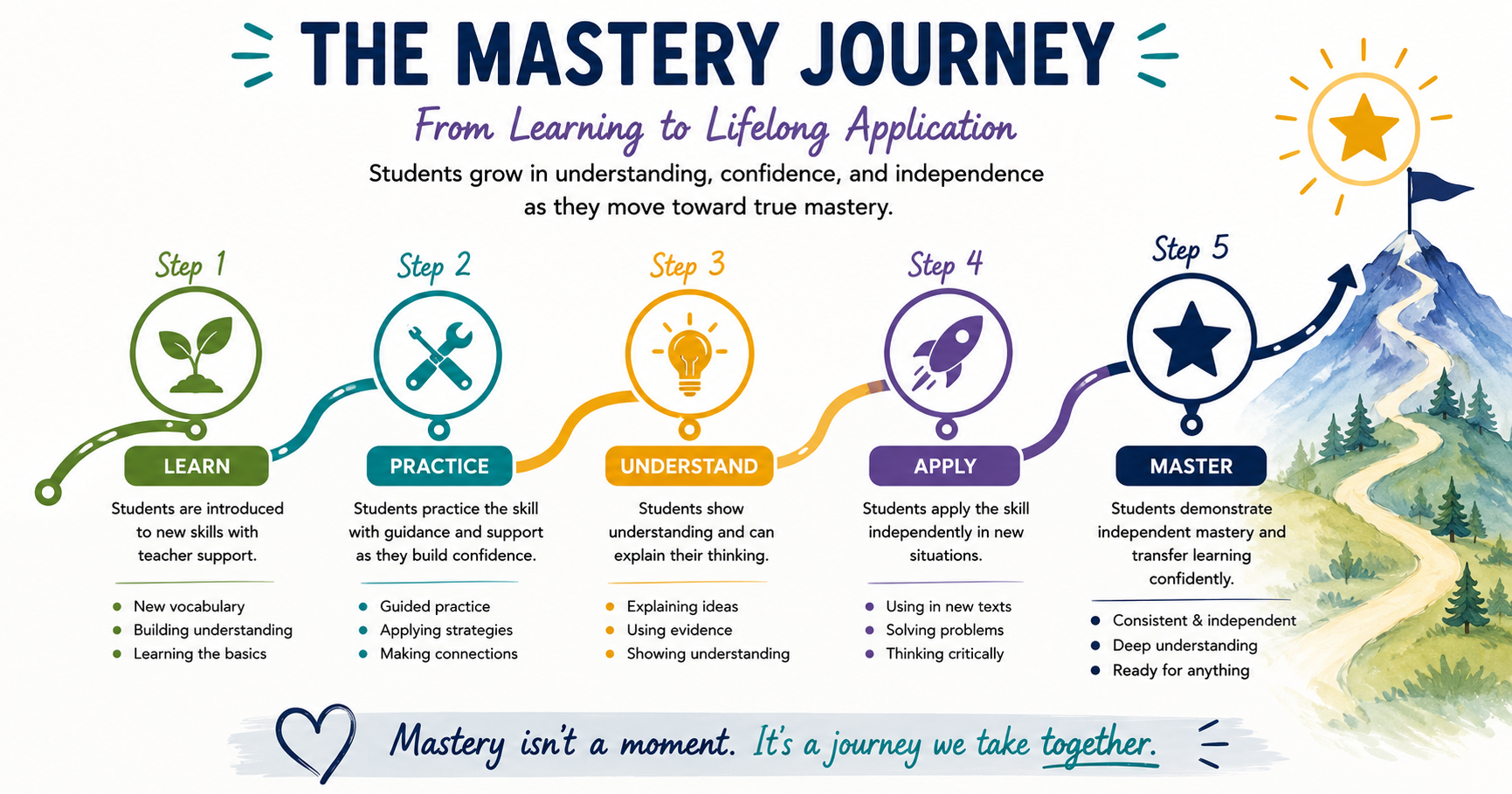
Mastery Is a Journey
Learning doesn't happen all at once.
Students move through stages as they develop confidence and independence.
🌱 Beginning
Students need significant teacher support.
Learning new vocabulary
Building understanding
Practicing with guidance
🌿 Developing
Students begin applying the skill with some support.
Making connections
Using evidence
Explaining thinking
🌳 Mastering
Students apply the skill independently.
Reading unfamiliar texts
Explaining reasoning
Defending answers with evidence
Transferring learning to new situations
What Does Mastery Look Like?
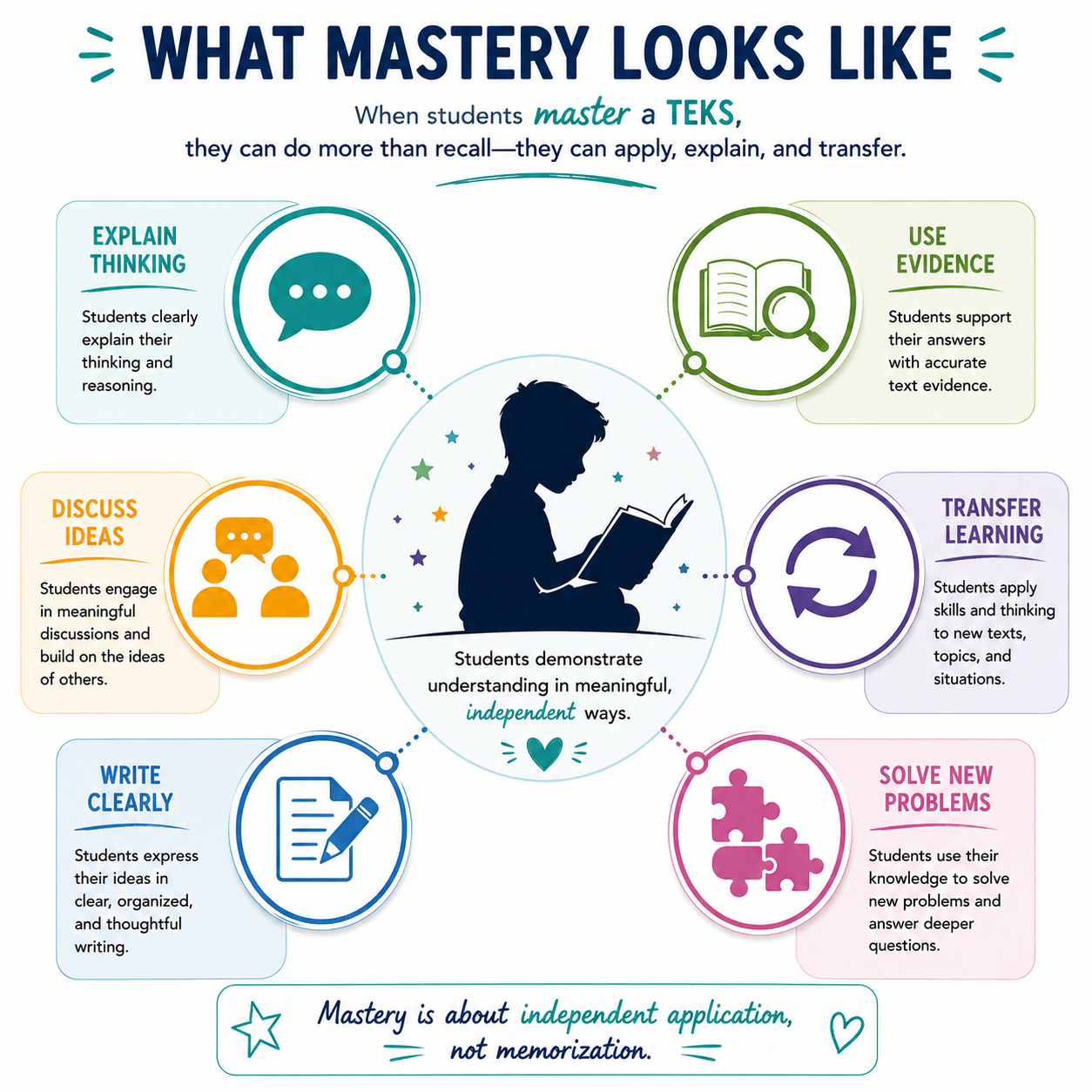
A student who has mastered a TEKS can...
✅ Explain their thinking
✅ Use evidence from the text
✅ Apply the skill in a new passage
✅ Answer deeper questions
✅ Make meaningful connections
✅ Transfer learning to unfamiliar texts
Mastery is about independent application, not memorization.
Mastery Is Visible
Teachers can recognize mastery when students consistently demonstrate their learning in authentic ways.
For example, students might:
Participate in rich classroom discussions.
Support responses with evidence.
Ask thoughtful questions.
Write clearly about their thinking.
Apply the same skill across different genres.
Explain not only what they think but why they think it.
The Role of the Teacher
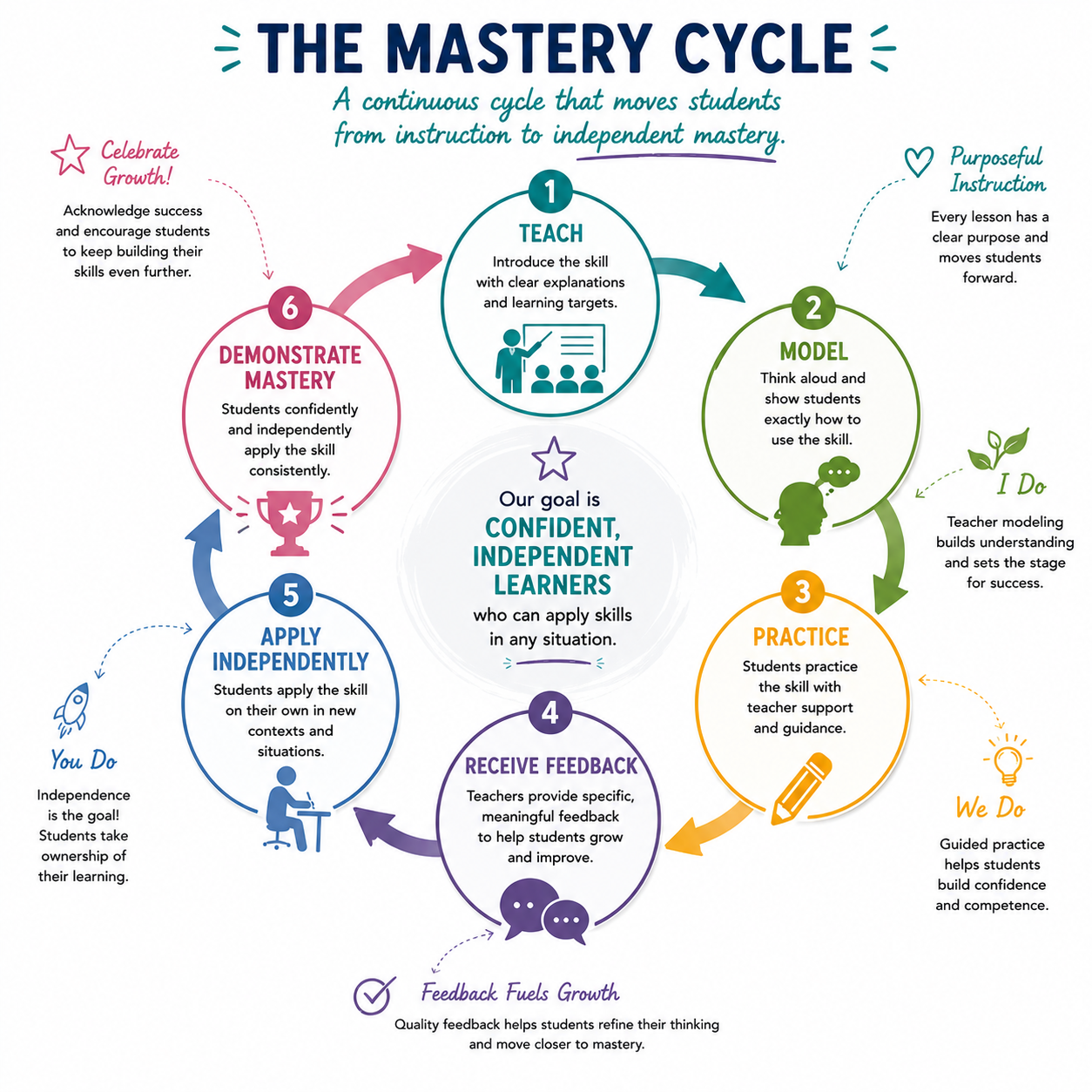
Teachers don't simply deliver instruction—they guide students toward mastery.
Effective instruction provides:
Clear learning targets
Purposeful modeling
Guided practice
Meaningful feedback
Opportunities for independent application
Multiple chances to transfer learning
How MasteryMaps™ Support Mastery
Every MasteryMap™ is designed with mastery in mind.
Instead of asking,
"Did I teach the lesson?"
MasteryMaps™ help teachers ask,
"Can my students successfully apply this skill independently?"
Each MasteryMap™ includes:
Clear explanations of the standard
Instructional guidance
Common misconceptions
Classroom examples
Assessment ideas
Questions that promote deeper thinking
Together, these tools help teachers move students from exposure to understanding and from understanding to true mastery.
Remember
Mastery isn't measured by one assignment—it's demonstrated through consistent, independent application over time.
Ready to Build Mastery?
Explore the Mastery Library to discover classroom-ready resources designed to help every student move confidently toward mastery of the Texas Reading TEKS.