TEKS Work Together
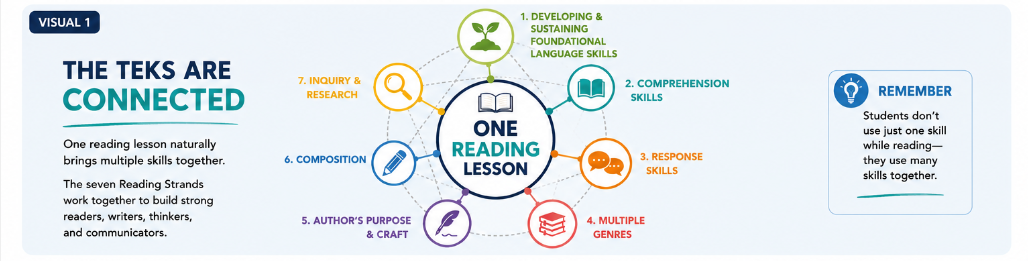
Reading instruction is most effective when students experience skills as connected rather than isolated.
The Texas Reading TEKS are intentionally designed to work together, allowing students to apply multiple literacy skills while reading authentic texts. When teachers understand these connections, planning becomes more purposeful, instruction becomes more meaningful, and students develop deeper comprehension.
Why the TEKS Are Connected
Reading is a complex process.
As students read, they don't simply practice one isolated skill at a time. Instead, they are constantly using multiple literacy skills together.
A student who is analyzing a character may also be:
Monitoring comprehension
Making inferences
Identifying the author's purpose
Supporting ideas with text evidence
Discussing ideas with classmates
Writing about their thinking
This is why the Reading TEKS are organized to support integrated instruction rather than disconnected lessons.
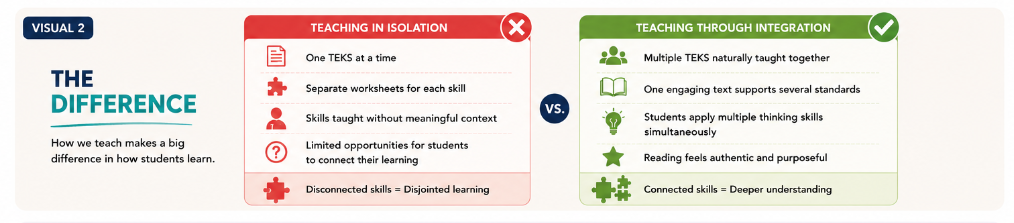
The Difference Between Isolated and Integrated Instruction
❌ Teaching in Isolation
One TEKS at a time
Separate worksheets for each skill
Skills taught without meaningful context
Limited opportunities for students to connect their learning
✅ Teaching Through Integration
Multiple TEKS naturally taught together
One engaging text supports several standards
Students apply multiple thinking skills simultaneously
Reading feels authentic and purposeful
One Text Can Teach Many TEKS
Imagine reading Because of Winn-Dixie with your class.
During one lesson, students might:

Students Are Doing
Monitoring understanding
Explaining theme
Analyzing characters
Identifying the author’s purpose
Supporting ideas with evidence
Writing about their thinking
Related Strand
Comprehension Skills
Multiple Genres
Multiple Genres
Author’s Purpose and Craft
Response Skills
Composition
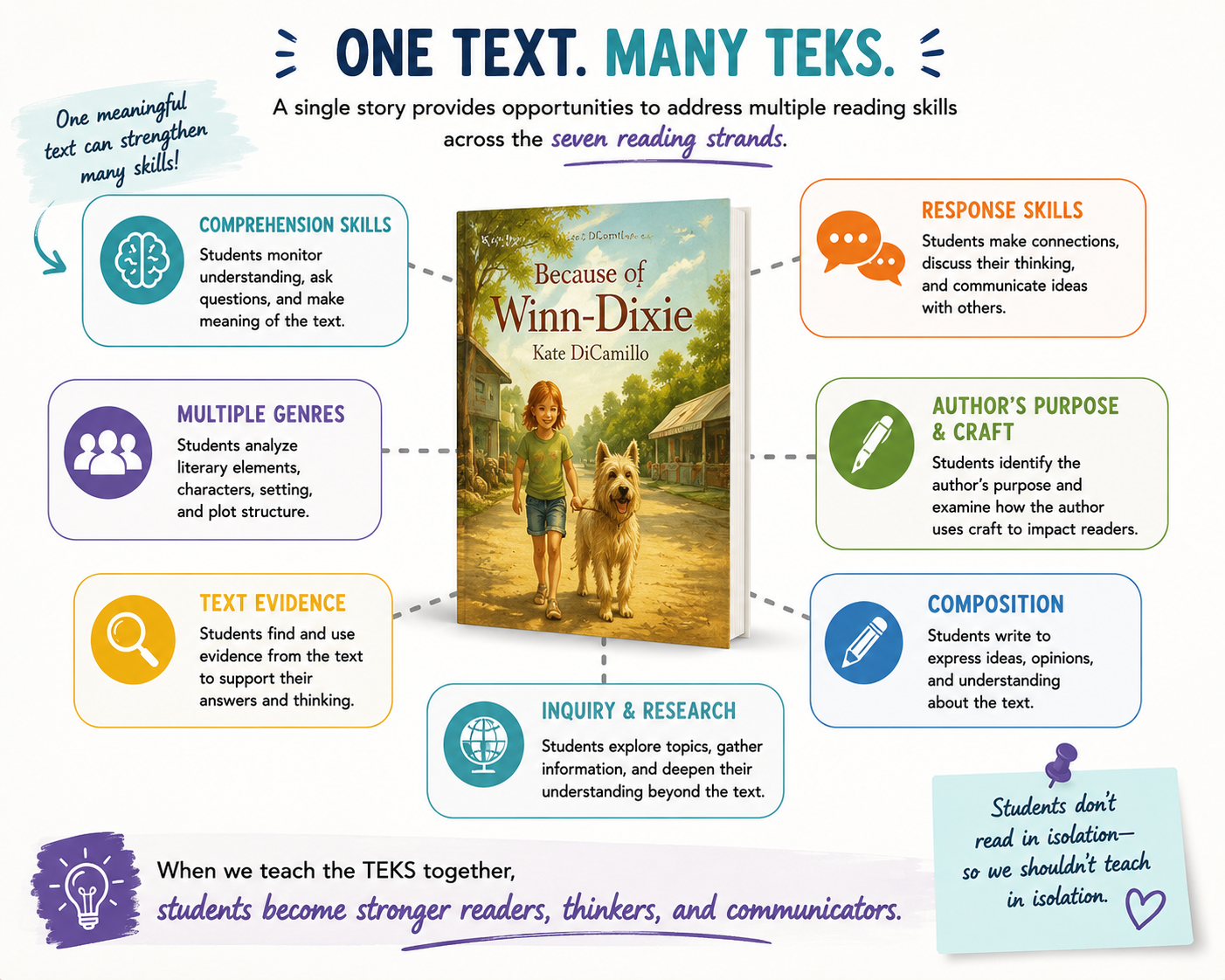
One rich text can support learning across multiple strands.
What This Means for Teachers
When teachers recognize how the Reading TEKS connect, they can:
Plan fewer isolated lessons.
Make better instructional decisions.
Increase student engagement.
Build deeper understanding.
Maximize instructional time.
Help students transfer learning across standards.
Teaching connected skills doesn't mean teaching more—it means teaching more intentionally.
How MasteryMaps™ Help
Every MasteryMap™ highlights natural connections between standards so teachers can see how multiple TEKS work together during instruction.
Instead of planning separate lessons for every standard, teachers can build cohesive learning experiences that reflect how students actually read and think.
Remember
Students don't read one standard at a time—so we shouldn't teach one standard at a time.
The strongest literacy instruction happens when Reading TEKS are connected through meaningful texts, purposeful questions, and authentic learning experiences.