How to Read a Texas Essential Knowledge and Skill Standard (TEKS)
Have you ever looked at a TEKS and wondered what all of the numbers and letters actually mean?
You're not alone. Many teachers can teach the standards but have never been shown how the TEKS are organized. Once you understand the structure, planning instruction becomes much simpler.
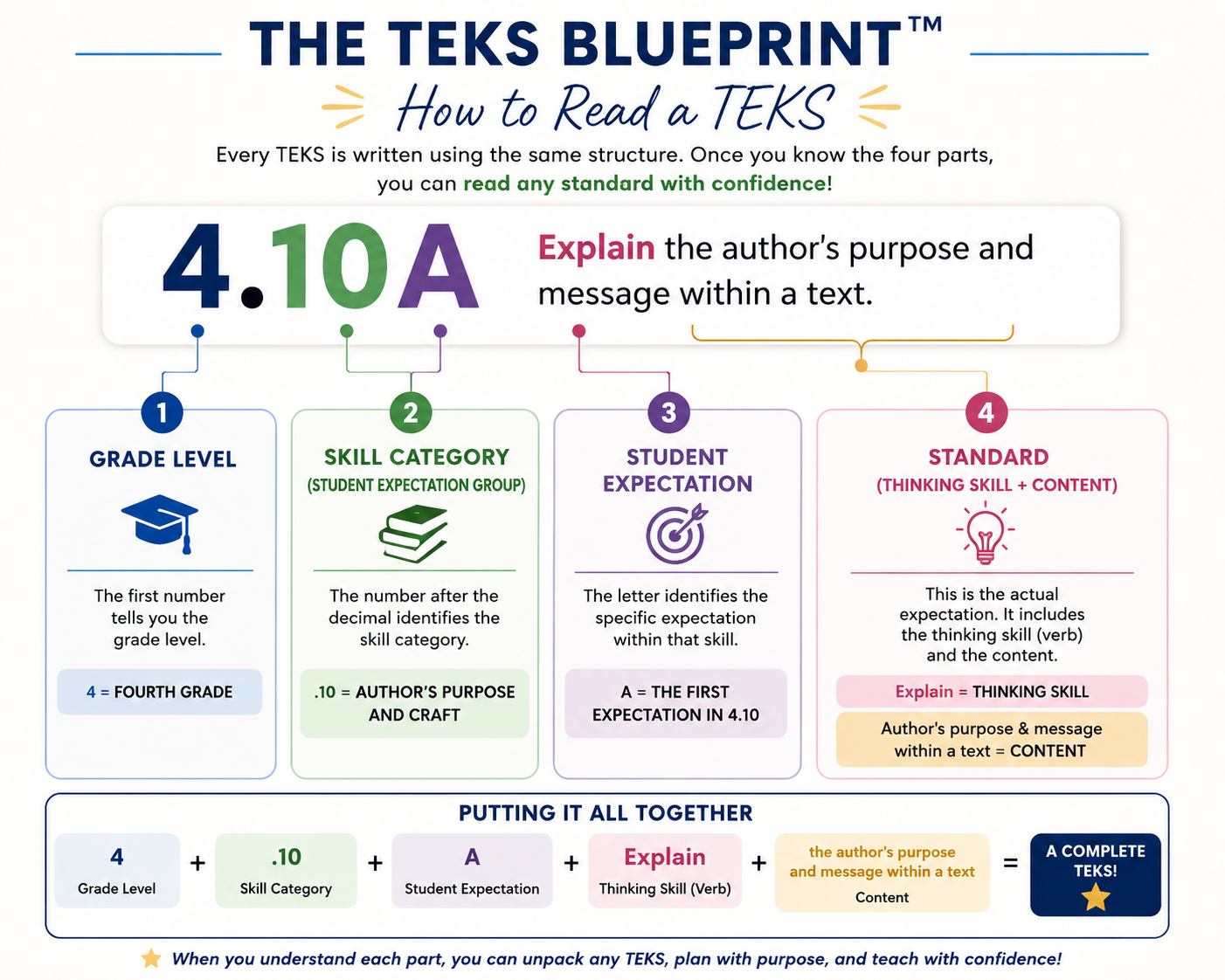
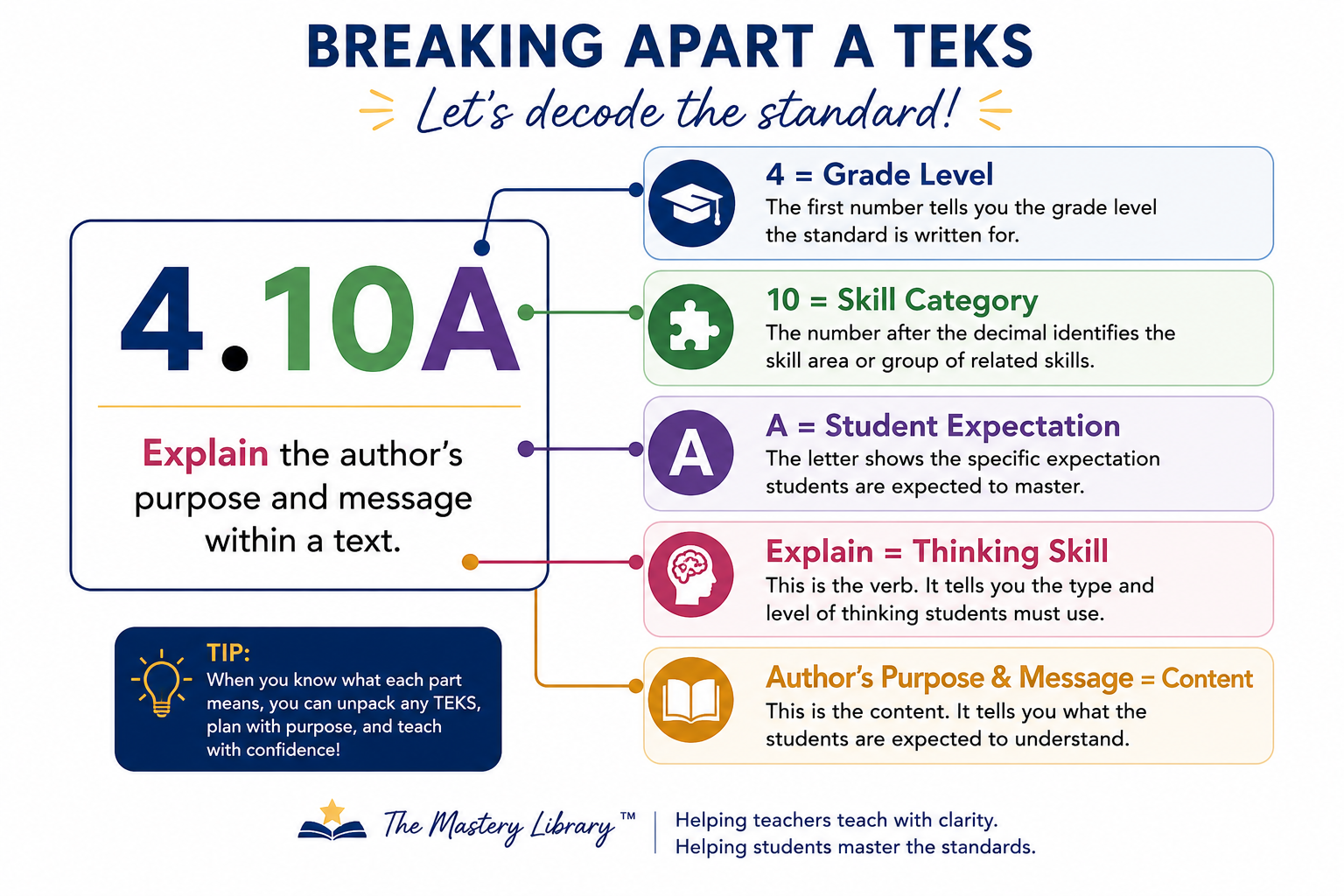
Every Texas Reading TEKS follows the same structure. Once you understand the parts of a TEKS, you'll be able to quickly identify what students are expected to learn and how deeply they are expected to think.
Let’s Break It Apart
The Strand
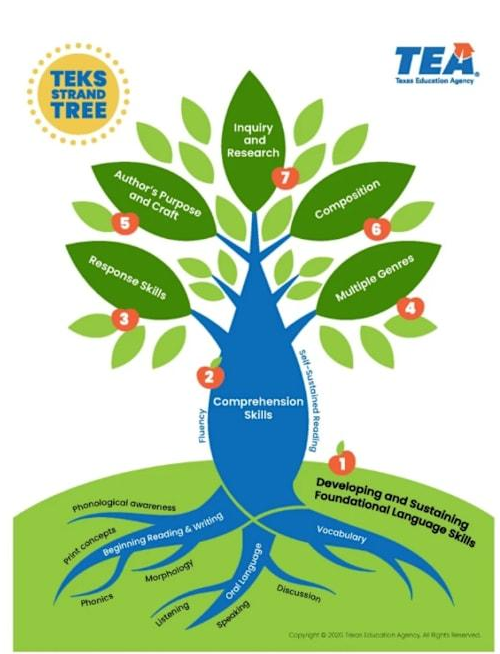
The strand is the broad category of learning. Think of it as the "big idea" that groups similar skills together.
Examples of Reading strands include:
Developing and Sustaining Foundational Language Skills
Comprehension Skills
Literary Elements
Author's Purpose and Craft
Composition
Inquiry and Research
The strand answers the question:
"What area of reading are students learning?"
2. The Student Expectation (TEKS)
The Student Expectation is the specific skill students are expected to master.
For example:
4.10A — Explain the author's purpose and message within a text.
This tells teachers exactly what students must know and be able to do by the end of instruction.
This is the part most teachers reference when planning lessons and assessments.
3. The Anatomy of a TEKS
Why This Matters
Many teachers jump directly into lesson planning without first unpacking the TEKS. Taking a few minutes to identify the strand, student expectation, process skill, and content creates a clearer understanding of the standard and leads to stronger instruction, more purposeful assessments, and better student outcomes.
At The Mastery Library™, every MasteryMap™ begins by breaking the TEKS into these four essential parts, giving teachers a practical framework they can use with every standard they teach.
The Mastery Library™ Framework
Reading a TEKS is only the first step.
Every MasteryMap™ goes beyond the code by unpacking each standard into:
✔ Teacher Translation
✔ Why This Standard Matters
✔ Academic Vocabulary
✔ Student Learning Targets
✔ Instructional Strategies
✔ Vertical Alignment
✔ STAAR Spotlight
✔ Common Misconceptions
✔ Classroom Examples
✔ Home Connections
✔ Teacher Questions
✔ Assessment Ideas
By organizing every TEKS in the same way, teachers spend less time interpreting standards and more time planning meaningful instruction.
Ready to Go Deeper?
Now that you know how to read a TEKS, explore how each standard is unpacked inside a MasteryMap™.
➡️ Explore Mastery Maps
Many teachers jump straight into lesson planning without first understanding the structure of the TEKS. By breaking every standard into these four parts, you'll quickly identify who the standard is for, what skill it addresses, which expectation students must master, and how students are expected to demonstrate their understanding.
That's exactly the approach we use throughout The Mastery Library™. Once you learn how to "read" a TEKS, planning instruction becomes faster, more intentional, and much less overwhelming.